
International Relations
Not on the Ballot, Yet Everywhere on It: What America's 2026 Midterms Mean for Washington and the World
#cssnexusDemocrats have taken both chambers of the US Congress in a vote shaped by prices, the Iran war and Donald Trump himself. What happened on 3 November, why it happened, and how far a new Congress can really change American policy, including towards Pakistan.
- #US Midterm Elections 2026
- #American Politics
- #US Congress
- #Divided Government
- #Checks and Balances
- #Donald Trump
- #US-Iran War
- #Pakistan-US Relations
- #CSS Current Affairs
- #International Relations
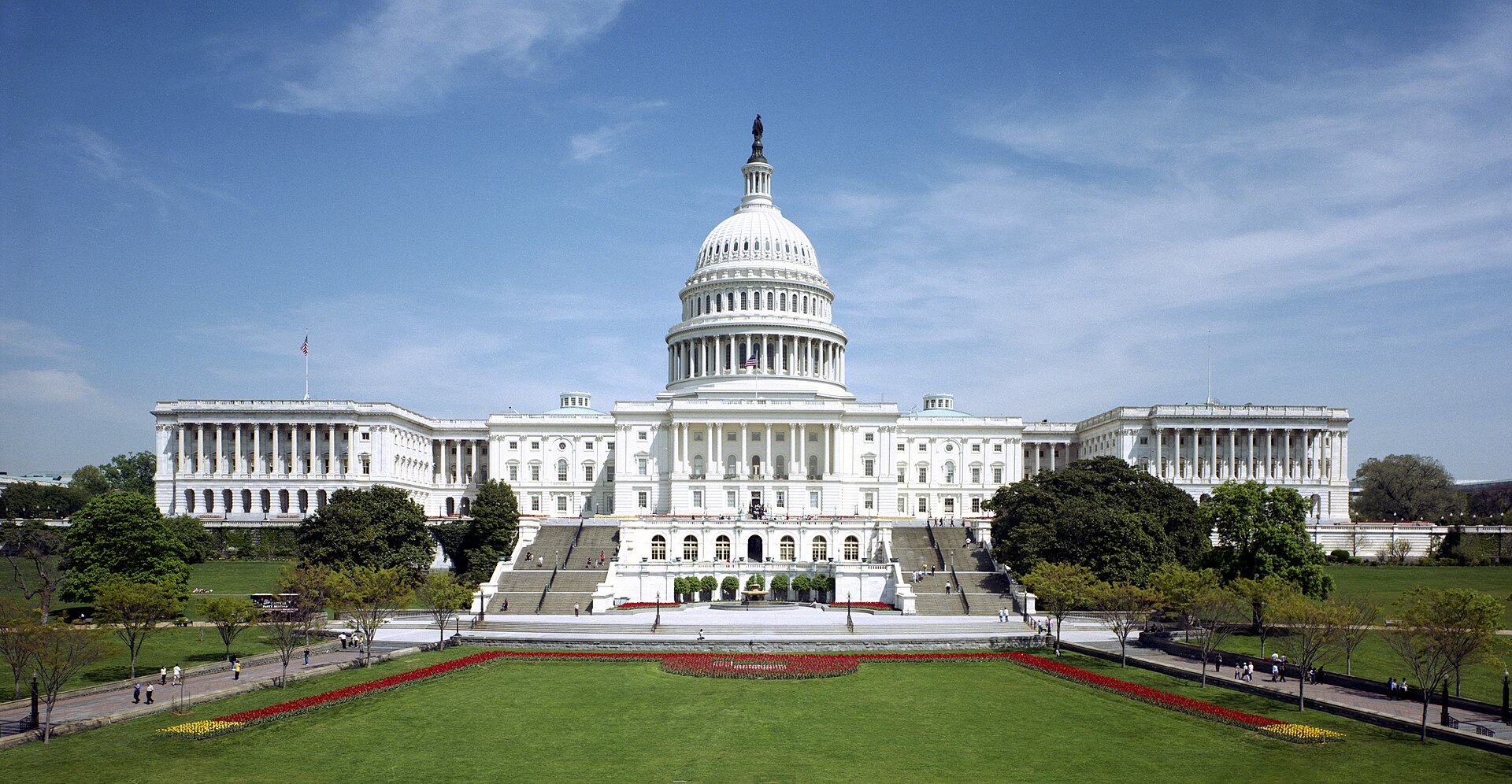
On Tuesday in America not a single ballot was marked with the name Donald Trump. He explained this is the problem by Wednesday morning. He was “not on the Ballot”, wrote Republicans, as he lost. If he had been they would have swept to victory”, he said. The majority of the people who went to the polls didn't. He was the question for them.
The midterm elections on 3 November gave control of the House of Representatives and the Senate to the Democrats, who have the ability to block, delay, and investigate for the final two years of Trump's time in office. Some of the victories were in places where Democrats had not thought they would be successful: Kansas, South Carolina, Texas. Counting will not be completed and some numbers below will move. The direction will not provide.
What was at stake
The American midterm elections occur halfway through the presidential term of office. All the 435 seats in the House are up for grabs since each member's term of service is for two years. Only about a third of the Senators are up for election at a time, since their terms are six-year staggered. This year, 35 of 100 seats (plus two special elections) have been held. A midterm can also change the faces of governors in 36 states and in three territories, which is why voters cast their ballots for governors as well.
Republicans went in holding both chambers. The Democrat's path to the Senate – on a tidally unpopular map – required them to pick up four seats.
The numbers so far
The Associated Press had called in advance on Wednesday to the House for the Democrats. Twenty-one votes more are needed for a majority. CBS News had placed the party between 251-268, reflecting the number of contests that were yet to be counted. Minority leader Hakeem Jeffries (D-N.Y.) is expected to win the Speaker position.
The Senate comes as the bigger surprise. The TV news network NBC News reports that seven seats were won from Republicans to Democrats: Iowa, Kansas, Maine, North Carolina, Ohio, South Carolina and Texas. CBS ended up with a majority of 54 Democratic seats to 44 Republican seats, with Alaska and Mississippi still up for grabs as Wednesday morning arrived. It will take some time in Alaska. Early on Wednesday, the Associated Press had Mary Peltola ahead of Senator Dan Sullivan by 626 votes, and a final result may not be known until ranked-choice voting is completed in mid-November.
A few of these results would have sounded far-fetched a year ago. With Hamilton's victory over Roger Marshall, he will become the first Democrat to represent the state of Kansas since 1932. Troy Jackson, a former logger and state senate president, who only was nominated in July, defeated Susan Collins in Maine. Annie Andrews defeated Darline Graham, who was appointed to the seat after her brother, Lindsey Graham, passed away in July, in South Carolina. Andrews will become the first female U.S. senator from Maryland. James Talarico beat Ken Paxton in Texas, Sherrod Brown came back in Ohio and Josh Turek did it in Iowa while Roy Cooper won in North Carolina.
The races of the governors were also similar. Before the vote, Republicans had 26 governorships and Democrats 24.Democrats were expected to win the majority, as they held 24 governorships to 26 for Republicans before the vote. Gina Hinojosa defeated Greg Abbott in Texas, Aaron Ford took Joe Lombardo in Nevada and Rob Sand took the win in Iowa. But there were limits to the wave. The Florida governorship was held by Byron Donalds, who was Republican.
Why the president's party so often loses
A portion of this is just the nature of midterms. The only other times when a party won the House in a midterm since the Second World War were when Bill Clinton won in 1998 and George W. Bush won in 2002. At the time, both enjoyed 60s approval ratings. The losses, however, can be huge. In Clinton's Republican sweep of 1994, Democrats gained 54 seats in the House; in Obama's 2010 "revolution," they picked up 63 seats. Republicans lost about 40 during Trump's first term, in 2018. Biden's party suffered nine losses in 2022 and walked away with just one silver lining.
There are two principle explanations that have been given by political scientists, and both are important for the examination hall. Angus Campbell's “surge and decline” hypothesis, which he put forward in 1960, suggests that a presidential contest attracts less committed voters who tend to vote for the eventual winner, and that these voters do not turn out to vote 2 years later. Edward Tufte's research in the 1970s saw the midterm as a referendum, and results reflected the president's approval ratings and the state of the economy.
Gallup's historical figures lean towards the second view. Looking at the approval ratings of the midterms from 1946 to 2010, it determined that those with approval rates over 50 percent lost an average of 14 members in the House, while those with approval rates under 50 percent surrendered an average of 36.
Prices, a war and a referendum
The 2018 exit polls were a Tufte's "parable. The economy was the nation's top concern for 39 percent of voters in the NBC News poll. Another 32% attributed it to the condition of democracy. Only 14 percent chose immigration, which was one of Trump's key issues in the 2024 campaign. Three out of four voters rated the economy as poor or not so good; 65 percent said that Trump's policies had hurt the economy. He has the lowest Election Day approval ratings of any president since 2008, at 38 percent.
In the Iran war there were no similar metrics, except that it was run through the price of fuel. There had been opposition for months prior to the vote. In the spring, a Washington Post-ABC-Ipsos poll showed 61 percent of Americans saying the use of force was wrong, while a CNBC poll showed 64 percent of registered voters saying the war had been a bad investment after accounting for the increases in petrol prices. It's remarkable for a vice president in office to attribute the party's losses to the war, and it won't be forgotten when the 2028 primaries start.
Trump has responded with both grievance and acceptance. He told the New York Times he was “absolutely willing to accept” the decision, and Fox News that he was “a little bit surprised”. Jeffries said his party would move on to "bringing costs down for working Americans" and it was a "stunning rebuke for MAGA extremism". It is the second phrase that needs more focus than the first. Those who voted Democrat due to grocery costs, fuel costs, and similar issues will want to see something done—and a party that rules Congress but not the White House will have a hard time providing that.
What a Democratic Congress can and cannot do
This is where some discipline is necessary in the excitement of the new Congress which will convene from 3 January 2027. When Democrats aren't in control, it's because Trump can veto their bills, Trump put it simply. On one small matter, he's correct. A two-thirds majority in both legislative houses is required to override a veto, and there's no real way to tell how many Democrats would be required to that end if they did not have some significant Republican backing. Impeachment, once the president is fired, requires a two-thirds majority of the Senate as well, and that requires a lot of Republican turnarounds if it's to work.
The bulk of the population receives less exciting and more practical rewards. Chair of the committee has power to call and subpoena witnesses to appear before the committee and to testify under oath. Since spending bills must pass both Houses, the House has the power to reject what it doesn't want to spend money on. The Senate decides on cabinet nominees and federal judges, and can simply decline to move them. Chuck Schumer's promise of "legislative razor wire" describes this sort of power quite well. It prevents rather than it initiates.
The same imbalance is found in foreign policy. Analysts at the Council on Foreign Relations anticipate the Iran war, as have senior Democrats before the vote said they would attempt to withhold funds for that war. Tariffs are a less effective tool, since the president makes them with the power Congress has already granted him, and Congress would have to pass a bill that the president could veto to remove his power. Experts cited in The Parliament Magazine do not believe there will be any tangible shift in Ukraine or Europe. Meanwhile, Foreign Policy forecasts “high-level investigations” into the administration's activities in the field. Look for more hearings and more conflict, in that respect, and fewer outright reversals. The last similar situation is when a Democratic House challenged Trump for two years during 2019-2021 and impeached him, with the Senate remaining Republican. His primary defense in Congress is gone this time, as Democrats control both houses of Congress, but not his veto.
Why Islamabad should pay attention
It is clear that Pakistan has an interest in this. Under Trump's second term, relations with Washington, which had deteriorated substantially over the years, were feeling better and Al Jazeera reported in the lead-up to the elections that Pakistan was one of the nations that was "eager to welcome a Republican victory. The role it played in US-Iran talks too has increased its worth in the eyes of the Americans, according to pre-election analysis by Outlook India.
So far, that connection has been largely via the White House. Congress works differently. It has its own committees, its own staff and a longer memory. In June 2024, the House passed a resolution calling for an investigation into irregularities that were claimed to have occurred in the February elections in Pakistan by an overwhelming margin, with the government of Pakistan raising objections in public. A Democratic Congress would be more concerned with democracy and human rights abroad than the current Congress was and it would determine the financing and legislation that determines any democracy or security assistance.
All of this doesn't have to be a rupture. Washington has proven to be quite resistant to change in the counterterrorism and regional security arena, and an interlocutor between the two sides will continue to serve the Democrats if their paramount objective is to stop the Iran war. However, a policy based on personal relationship with one president is clearly weak in a joint power system. The prudent policy that Islamabad should adopt is to broaden its ties to Capitol Hill at this juncture where good will can still be spent.
This is a method to use in the exam.This is a strategy to be used in the exam.
This election will provide content for multiple questions for CSS and PMS candidates. It's a contemporary example of separation of powers and divided government in American government, where one party is in the White House and one party is in Congress. It is also a relevant comparison with Pakistan. A US president remains in office regardless of what goes on at the midterm while a Pakistani prime minister relies on the confidence of the National Assembly. Much of American politics follows in this manner: they can punish their government without overthrowing it.
It can be used by candidates to examine the extent to which foreign policy is constrained by domestic politics, using the example of the Iran war. A good answer would be to recognize the disconnect between the voters' comments made on Tuesday and what the Constitution says Congress can do about it.
There is one warning to be given to anyone quoting these numbers. These are all numbers as of 4 November and are preliminary exit poll results, which can be subject to corrections. Check the final certified results before using a seat count in an answer. The overall conclusion – that a president at 38 percent approved who had an unpopular war and voters who were not happy about prices lost both houses of Congress – is already safe to write. Trump, claiming he was not on the ballot, may have had his name on the mind of the voters.
The writer can be reached at numair345@gmail.com
Get new explainers on WhatsApp
Follow channel

Comments
No comments yet. Share your view or ask a question about this topic.