
Pakistan Affairs
Emergency in Khyber Pakhtunkhwa: why it happened, what it changes, and what it means for peace
#cssnexusOn 11 October 2026 the federal government placed Khyber Pakhtunkhwa under an emergency and governor's rule. A look at the reasons given, the constitutional route taken, the costs so far and the risks ahead.
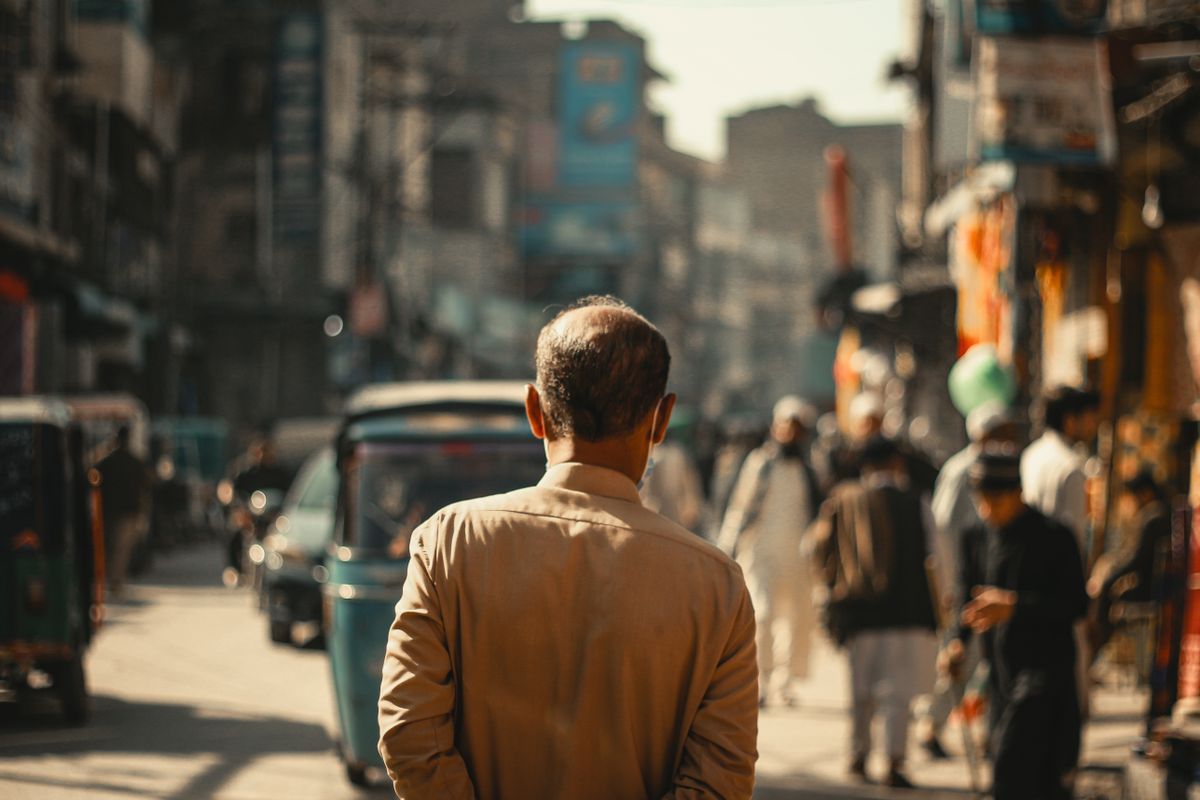
Few people in Peshawar expected the second week of October to end with the provincial government gone. On 11 October 2026, President Asif Ali Zardari signed the Prime Minister's advice and proclaimed an emergency in Khyber Pakhtunkhwa, together with governor's rule. By that evening the elected cabinet of Chief Minister Sohail Afridi had been dissolved, and the province was being run from the Governor's House by Faisal Karim Kundi and an eleven-member advisory council.
It was the most serious step Islamabad has taken against a provincial government in more than a decade. For students of Pakistan Affairs it is also a live case study in federalism, emergency powers and the old question of who is responsible when a province bleeds.
What exactly was imposed
Two separate constitutional provisions were used, and the difference between them matters. Article 232 allows the President to declare an emergency when the security of Pakistan, or of any part of it, is threatened by war, external aggression or internal disturbance beyond the power of a provincial government to control. During such an emergency the provincial assembly survives, but federal law overrides provincial law and Parliament can legislate on provincial subjects. Since the Eighteenth Amendment, an emergency based on internal disturbance needs either a resolution of the provincial assembly or the approval of both Houses of Parliament.
Article 234 goes further. It applies when the President is satisfied that a province cannot be governed in accordance with the Constitution. The federal government can then take over the executive functions of the province, usually through the governor, and the law-making powers of the provincial assembly pass to Parliament. Governor's rule runs for two months at a time and cannot be stretched beyond six months in total. Neither the President nor the governor can touch the powers of the High Court.
A joint sitting of Parliament ratified both proclamations on 15 October. The session was bitter: opposition members tore up copies of the resolutions, and a procedural motion to fast-track the business passed by 214 votes to 56. Unless Parliament extends it, the current term of governor's rule ends in December.
The reasons the government gave
The federal case rests on security. The federal cabinet accused the PTI-led provincial government of a deliberate disengagement from the fight against terrorism. Law Minister Azam Nazeer Tarar called the decision a last resort, reached after long cabinet discussion, and pointed to deadly attacks in Tank and Bajaur. He also said a provincial apex committee had found the Counter Terrorism Department short of both institutional structure and resources, and he criticised provincial ministers for attending political rallies instead of visiting affected districts.
The numbers give that argument some weight. According to the Pakistan Institute for Conflict and Security Studies (PICSS), July 2026 was the deadliest month of the year, with 154 deaths in the mainland districts of the province alone. A report placed before the federal cabinet said that about three-quarters of attacks in the province this year targeted police and security personnel. Militants have also changed their methods: drone attacks on police and security forces, none of which were reported in 2024, have since passed 170.
The politics behind the security argument
Security was not the only thing happening that week. On 4 October, after talks between the government and the opposition broke down, PTI had set off from Lakki Marwat on a march towards Islamabad to press for the release of Imran Khan, with Chief Minister Afridi at its head. The emergency was declared while that march was on the road.
Afridi and the party's provincial president, Junaid Akbar, were detained soon afterwards. Police described it as protective custody; PTI called it an arrest, and for a time even senior party lawyers said they did not know where the chief minister was being held. PTI chairman Barrister Gohar Ali Khan told Parliament that his party rejected the emergency, governor's rule and the calling in of the army, while adding that the army belongs to every Pakistani. Mahmood Khan Achakzai, the Leader of the Opposition, asked a sharper question: if a fenced border has not stopped militants, how will removing an elected government stop them?
That is the heart of the dispute. The government says a province cannot fight terrorism while its leadership is busy with street politics. Its critics say the timing shows the real target was a political march, not militancy. Both claims can be partly true at the same time, and that is what makes this episode so difficult to judge.
Is there a precedent?
Pakistan has been here before, though never in quite this way. In February 2009 President Zardari's government placed Punjab under governor's rule after the Supreme Court disqualified the Sharif brothers; it lasted about a month. In January 2013, after the bombings that killed scores of Hazaras in Quetta, the Raisani government in Balochistan was suspended and the governor took charge for two months. In both cases the move came after a single shock and ended quickly. Khyber Pakhtunkhwa is different: the trigger is a long security crisis rather than one event, and the removed government belongs to the main opposition party, which has won the province in every general election since 2013.
The impacts so far
The first impact is on representation. Millions of voters in the province now have no elected executive. Decisions on policing, health, education and development spending are being taken by an appointed council answerable to Islamabad, not to the provincial assembly.
The second is on federalism. The Eighteenth Amendment of 2010 was meant to settle the balance between the centre and the provinces, and it made emergency powers harder to use. Many in the smaller provinces will read this episode as a sign that the balance can still be overturned when the centre and a province fall out politically. Sindh and Balochistan will be watching how long the arrangement lasts.
The third is on security itself, and here the early picture is mixed. PICSS recorded 40 militant attacks in mainland Khyber Pakhtunkhwa in October, down from 58 in September, and deaths fell sharply. A single month proves little, though. Violence in the province has risen and fallen before, and militant groups often wait out a security surge.
Future implications for peace in Pakistan
The emergency can help peace only if it produces things an elected government could not: a better-funded Counter Terrorism Department, one chain of command between the police and the army, faster prosecution of terrorism cases and real development money for the merged districts. If the next few months deliver those, the federal government will have a case to make when the proclamation comes up for renewal.
The risks are just as real. Counter-insurgency depends on public cooperation, and in Khyber Pakhtunkhwa that cooperation runs through local politics. If a large part of the province comes to see the emergency as punishment for its vote, militants will find it easier to recruit and harder to isolate. Police officers who must work with communities need local trust, and a governor's council cannot easily replace an elected chief minister in that role.
There is also a wider political cost. A prolonged confrontation between the federal government and PTI keeps the country in permanent crisis, distracts attention from the Afghan border and the economy, and weakens the shared national position that any lasting deal with Kabul on the TTP will need. Peace in the north-west has never been won by force alone; it has needed political agreement behind it.
The way forward
Three steps would reduce the damage. First, the federal government should publish clear, measurable security goals for the emergency period, so that Parliament can judge any request for an extension against results rather than rhetoric. Second, the courts should hear the challenges to the proclamations quickly, because a decision either way is better than months of doubt. Third, both sides need to return to talks. An elected government in Peshawar that cooperates with the centre on counterterrorism is the only arrangement that can last.
Emergency powers are written into the Constitution for real crises, and Khyber Pakhtunkhwa's security situation is a real crisis. But they are meant as a bridge back to normal government, not a replacement for it. How quickly that bridge is crossed will decide whether October 2026 is remembered as the start of a recovery in the province or as one more turn in Pakistan's long cycle of confrontation.
For CSS and PMS aspirants
This topic fits questions on federalism, the Eighteenth Amendment, civil-military relations, terrorism and internal security. Learn the difference between Article 232 (emergency) and Article 234 (governor's rule), the role of Parliament's joint sitting, the six-month limit, and the 2009 Punjab and 2013 Balochistan precedents. A balanced answer gives the government's security case and the opposition's democratic objection, then ends with practical recommendations.
The writer can be reached at ma6749429@gmail.com
Get new explainers on WhatsApp
Follow channel
Comments
No comments yet. Share your view or ask a question about this topic.