
International Relations
Missiles over the Haramain: a changing Middle East and Pakistan's balancing act
#cssnexusReported Houthi attacks near Makkah and Madinah, a war between the US and Iran, and a new defence alliance with Saudi Arabia and Turkiye have pulled Pakistan deeper into the Gulf than ever. Can Islamabad protect the holy places and still keep the peace?
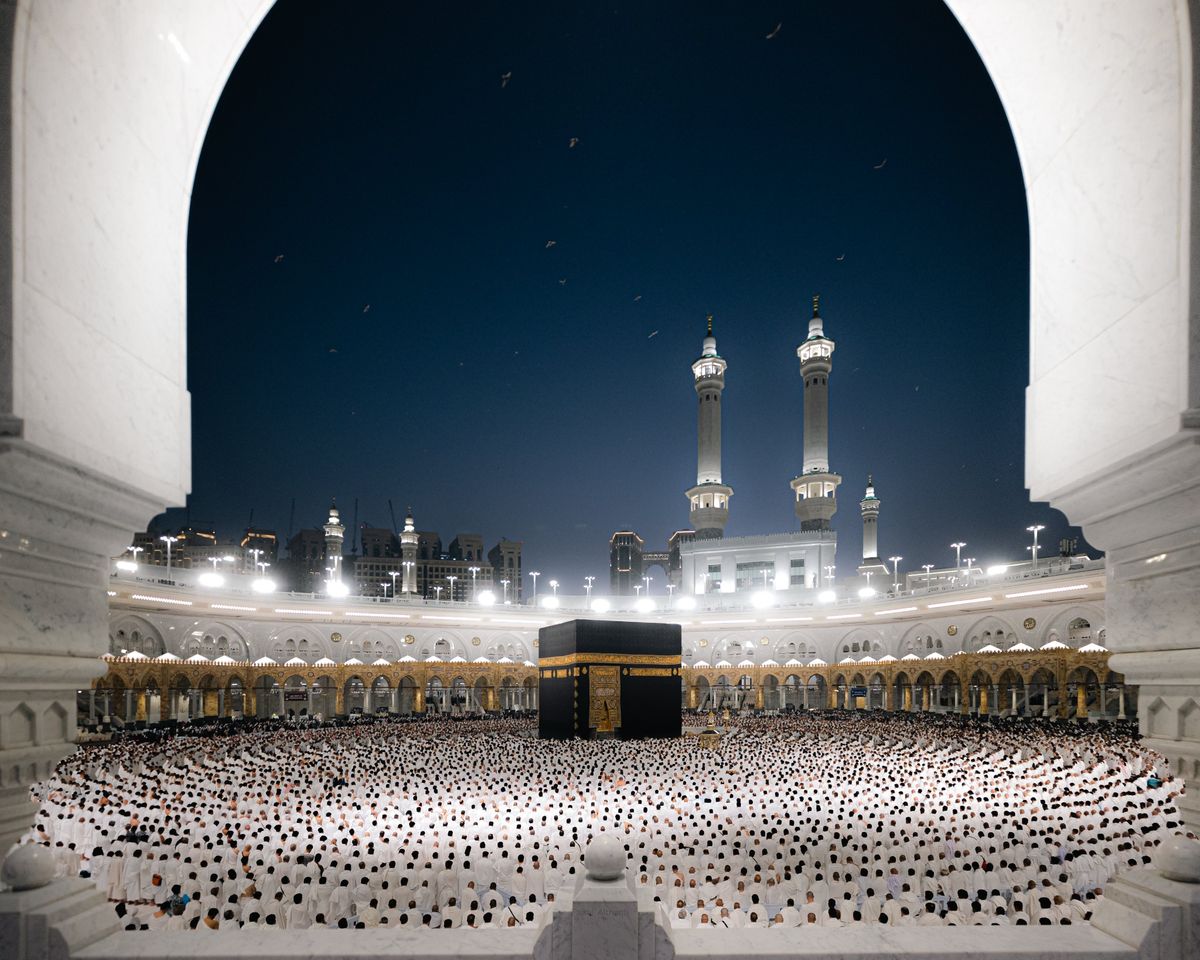
For most Pakistanis, the Haramain are not a foreign-policy file. They are the places their parents saved for years to visit, the direction they face five times a day. So when Saudi Arabia said on 16 September that a Houthi missile had been fired towards Makkah, the reaction in Pakistan was immediate and emotional. Riyadh called it a red line. Its military spokesman, Turki al-Maliki, said it was the first time in almost a decade that the holy city had been targeted.
More alarms followed. In mid-October came reports of a rocket fired towards the Madinah region, and on 24 October Saudi air defences said they had intercepted two ballistic missiles heading for the regions of Makkah and Madinah, with debris falling in open areas. Al-Azhar and the Gulf Cooperation Council condemned the attacks as an assault on the sanctity of Islam's holiest sites. The Houthis, who follow the Zaydi school and also revere Makkah, deny ever aiming at either city and say Riyadh has offered no proof.
Nothing has struck inside the sacred precincts, and Saudi authorities have reported no strike inside either city. But the fact that such a question is being asked at all tells us how far the region has slid in 2026, and how difficult Pakistan's position has become.
How the region reached this point
The slide began on 28 February, when American and Israeli air strikes on Iran killed Supreme Leader Ali Khamenei and several senior officials. Iran answered with strikes on Israel, on US bases and on Gulf states, and closed the Strait of Hormuz. Hezbollah opened a front from Lebanon. The Houthis in Yemen joined in on Iran's side.
A ceasefire arranged in April, and a memorandum signed in June, briefly raised hopes. Both broke down. Fighting resumed in July, and since September hostilities have flared again. Alongside the main war, a second conflict has grown between Saudi Arabia and the Houthis: Saudi strikes on Sanaa and Hodeidah, a Houthi declaration of a naval blockade of the kingdom, attacks on Saudi tankers and airports, and Houthi control of the Bab al-Mandab strait. The missiles reported near Makkah and Madinah belong to this second, angrier war.
Why the holy places matter so much
Every war in the Middle East has a religious undertone, but an attack on the Haramain is different. It touches the one thing that unites the Muslim world across sect and nation. That is also why it is dangerous. Each side in the current wars wants to present itself as the true guardian of Islam and its rival as the enemy of the faith. Once that language takes hold, a political conflict becomes a sectarian one, and sectarian conflicts do not stay inside borders.
The same danger hangs over Jerusalem. In March the OIC, the Arab League and the African Union jointly condemned the continued closure of Al-Aqsa Mosque by Israeli authorities, including during Ramadan, calling it a grave breach of the historic status quo. For Muslims, the Haramain and Al-Aqsa sit in the same moral space. Anyone who wants to mobilise anger can link the two in a single sermon.
Pakistan in the middle
No Muslim country is pulled in more directions than Pakistan. It is bound to Saudi Arabia by faith, by history and by money: millions of Pakistanis work in the Gulf, their remittances keep the economy afloat, and roughly nine-tenths of Pakistan's oil imports come from the region. It shares a border of about 900 kilometres with Iran, and between 15 and 20 percent of its own people are Shia. When Khamenei was killed, protests broke out across Pakistan, and in Karachi a crowd tried to storm the US Consulate; at least ten people were killed there.
Pakistan's answer has been to stand on two legs at once. The first is security for Saudi Arabia. The Strategic Mutual Defence Agreement signed in Riyadh in September 2025 treats aggression against one country as aggression against both. In August 2026 it grew into the trilateral Makkah agreement with Turkiye, under which an armed attack on any one of the three is to be regarded as an attack on all. Pakistani fighter jets were reported at a Saudi air base in April, and reports since speak of thousands of troops and air-defence units have been deployed since. After the alliance was invoked in early October, Pakistani and Turkish forces were sent to the kingdom.
The second leg is diplomacy, and here Pakistan has done more than any outsider expected. In March Islamabad carried messages between Washington and Tehran. With China it floated a five-point peace plan. In April it helped arrange the first ceasefire and then hosted the Islamabad Talks, where an American team led by Vice-President JD Vance sat across from an Iranian delegation led by Speaker Mohammad Bagher Ghalibaf, with Prime Minister Shehbaz Sharif, Field Marshal Asim Munir and Foreign Minister Ishaq Dar in the middle. The talks ended without a deal, but the memorandum signed in June carried Islamabad's name. As recently as 26 October, Saudi, Pakistani and Turkish officials were in Tehran.
The risks of balancing
Balancing sounds wise until the weights get heavier. The Makkah alliance raises expectations in Riyadh that Pakistan may not be able to meet. When Houthi attacks continued in September, Islamabad said its response would be primarily diplomatic, and critics asked what the pact was worth. On the other side, Iranian state media accused Turkiye and Pakistan of joining a Saudi war on the Yemeni people. Pakistan can lose credibility with both capitals at the same moment.
There is also the risk at home. Pakistan has paid dearly for sectarian violence before, from the proxy battles of the 1980s to the attacks on Shia and Hazara communities in the 2010s. Any image of Pakistani soldiers fighting fellow Muslims in Yemen would be used by extremists on every side. The army's warning to clerics in March that violence over events abroad would not be tolerated shows that the leadership understands this.
The third risk is economic. A wider Gulf war means higher oil prices, which Pakistan felt in April when petrol crossed 450 rupees a litre. It also threatens remittances and the jobs of Pakistani workers in the Gulf. Pakistan cannot afford to be on the losing side of a long war, and it cannot afford a long war at all.
What Pakistan should do
First, keep the defence commitment strictly defensive. Protecting the Haramain and Saudi cities from missiles and drones is a duty most Pakistanis accept. Joining offensive operations inside Yemen is something else entirely and should stay off the table. Saying so clearly would reassure Tehran without weakening the promise to Riyadh.
Second, use the OIC and the religious leadership of the Muslim world. A joint declaration that the holy places of Islam are protected from all military action, signed by Saudi, Iranian, Turkish, Egyptian and Pakistani scholars alike, would take some of the poison out of the sectarian propaganda. Pakistan, with both Sunni and Shia scholars of standing, is well placed to start that effort.
Third, open a channel to the Houthis through Oman, which has spoken to them for years. A Saudi-Houthi truce would remove the immediate threat to the Haramain far more surely than any air-defence battery.
Fourth, look after the home front: protect Shia processions and Sunni gatherings alike, act quickly against hate speech, and prepare a plan to bring workers home from the Gulf if the war spreads.
Pakistan's founders imagined a country that would stand with the Muslim world without being consumed by its quarrels. In 2026 that idea is being tested harder than ever. If Islamabad can help keep missiles away from the holy places while keeping the door open in Tehran, it will have shown that being a friend to everyone, in a region at war, is not weakness. It may be the only real service a Muslim power can offer.
For CSS and PMS aspirants
This topic fits Current Affairs and International Relations questions on Pakistan's relations with Saudi Arabia and Iran, the OIC, sectarianism, energy security and Muslim unity. Learn the key dates: the US-Israeli strikes on Iran on 28 February 2026, the April ceasefire and Islamabad Talks, the Pakistan-Saudi defence agreement of September 2025 and the Makkah agreement with Turkiye of August 2026. A strong answer presents Pakistan's interests on both sides and ends with practical recommendations rather than slogans.
The writer can be reached at arsalemursaleen@gmail.com
Get new explainers on WhatsApp
Follow channel
Comments
No comments yet. Share your view or ask a question about this topic.