
Environment
COP31: When the World Met Again to Save Itself, But Did It Listen?
#cssnexusAntalya promised an "Implementation COP", but talks ran two days over and closed on 22 November 2026 with no agreed deal. For Pakistan, which emits less than one percent of global carbon, climate talks are a matter of survival, and climate action must also start at home.
Test yourself: GK MCQs on this subject
- Chemistry and environment MCQs· Everyday Science
- Rivers, dams and mountains MCQs· Pakistan Studies
- Seas, straits and canals MCQs· World Geography
For one-paper tests, revise with the GK library.
Every year the world gathers in one city, in one big hall, to talk about the same thing: the earth is getting hotter, the glaciers are melting, the floods are coming more often, and the poor are paying the price for the mistakes of the rich. This year that gathering was called COP31, and it was held in Antalya, Türkiye, from 9 November 2026. Leaders, scientists, activists and young people from almost two hundred countries sat together under a Presidency that called it the "Implementation COP", with the promise of a sustainable, resilient and equitable future. The words sounded beautiful, but the question that followed every speech was simple: will these words turn into action, or will they once again remain only on paper?
The timing of COP31 was not ordinary. The world had just come out of another year of record heat, wildfires in Europe, droughts in Africa, and floods in Asia. Pakistan, a country that contributes less than one percent of global carbon emissions, was once again standing among the most vulnerable. The 2022 floods were still fresh in our memory, when one third of the country went under water, millions lost their homes, and farmers lost their crops.
For countries like Pakistan, Bangladesh, Nepal and the small island states, COP is not a conference, it is a matter of survival. When a farmer in Sindh loses his entire cotton crop to a flood that came because of a warming planet, he does not need a speech, he needs money, technology and justice.
One of the biggest discussions at COP31 was about NDCs, the promises each country makes to cut its emissions. This time countries were asked to present NDC 3.0, a stronger, more honest version of their promise. But the world already knows the problem. Rich countries promise a lot and deliver very little. They talk about net zero by 2050, while still opening new oil and gas projects today. Developing countries ask a fair question: if you became rich by burning coal and oil for two hundred years, why are we now being told to stop without any help?
This is why climate finance became the heart of COP31. Poor countries do not want charity, they want the money that was already promised to them, the money for adaptation, for building stronger dams, for heat-resistant crops, for early warning systems, for shifting to solar and wind without going into more debt.
Another painful truth that came out in Antalya was about loss and damage. When a village is washed away, when a glacier melts and takes a whole valley with it, that loss cannot be reversed. The Loss and Damage Fund, which was created with great celebration at earlier COPs, is still struggling to actually reach the people who need it.
Delegates from mountain countries, from Nepal to Kyrgyzstan to Pakistan, reminded the world that mountains are not just beautiful postcards, they are water towers for billions of people. When glaciers retreat, rivers dry, food disappears, and people are forced to migrate. At COP31 the conversation also moved from mountains to sea, from glaciers to coasts, showing that climate change has no border.
But COP31 was not only about governments. Outside the negotiation rooms, young people, women, farmers and indigenous communities were raising their voices louder than before. They were asking why decisions about their future are made behind closed doors, by people who will never feel the heat of a 50 degree summer in Jacobabad. They were demanding that climate action must be equitable, meaning it must be fair for women, for youth, for the poor. A solar panel in a rich city is good, but a solar panel in a village in Tharparkar that gives a child light to study at night, that is real climate justice.
And then there is the question of our own responsibility. We often blame big countries, and rightly so, but we must also look at ourselves. In Pakistan, we cut trees to build housing societies, we throw plastic in our rivers, we burn crop residue, we waste water as if it will never finish. COP31 reminded us that climate action does not start in Antalya, it starts in our own street, in our own home. Planting a tree, saving water, using public transport, saying no to plastic, these acts may look small, but when millions do them, they become a movement.
In the end, COP31 ended even worse than most COPs end. The talks were meant to close on 20 November, but they dragged on for two more days, and on 22 November the Presidency announced that no final agreement could be adopted. The last draft did not even mention coal, oil and gas, and the European Union and others refused to accept it. Some new pledges were made on energy, on food and health, on resilient cities, on zero waste, but the main deal was missing.
The world is still far from keeping global warming below 1.5 degrees. Scientists have warned us again and again that we are running out of time. The earth does not wait for the next conference. It does not wait for the next election. It keeps warming, it keeps flooding, it keeps burning.
Perhaps the real success of COP31 is not in what was signed, but in what was understood. That climate change is not an environmental issue, it is a human issue. It is about a mother who cannot feed her child because the crop failed, a student who cannot go to school because the road is flooded, a fisherman who cannot fish because the sea is rising. If the leaders in Antalya truly heard those voices, then COP31 was not just another meeting. If they did not, then we will meet again next year, in another beautiful city, to talk about the same burning planet, while the planet keeps burning.
For CSS and PMS aspirants
This topic is directly relevant to Current Affairs, Environmental Science, General Science and Ability and Pakistan Affairs, and to Essay questions on climate justice, global governance and the North-South divide. It supports answers on the UNFCCC process, NDC 3.0, climate finance, the Loss and Damage Fund, adaptation, and Pakistan's climate vulnerability. Keep the key facts ready: COP31 met in Antalya, Türkiye, from 9 November 2026 and ran over to 22 November without an agreed final text; Pakistan emits less than one percent of global carbon emissions; and the 2022 floods put one third of the country under water.
The writer is a Senior Journalist and CSS/PMS mentor and can be reached at quraitulainqureshy@hotmail.com.
Practise this topic: CSS solved answers
- CSS 2016 · Current AffairsDiscuss the adverse impact of climate change on the world and the measures recently adopted by the Paris Conference to address this issue.
- CSS Special 2023 · Pakistan AffairsWhat policy options should Pakistan exercise to effectively address its vulnerability to the phenomenon of global warming?
- CSS 2026 · Current AffairsCOP — the annual climate negotiation, Conference of Parties to the UN Framework Convention on Climate Change (UNFCCC) — is organized every year since 1995. What are the significant achievements of COPs in general and COP-30 in particular?
See how real exam questions are answered: browse the CSS solved past papers, including Current Affairs, Pakistan Affairs and Essay answers.
Get new explainers on WhatsApp
Follow channel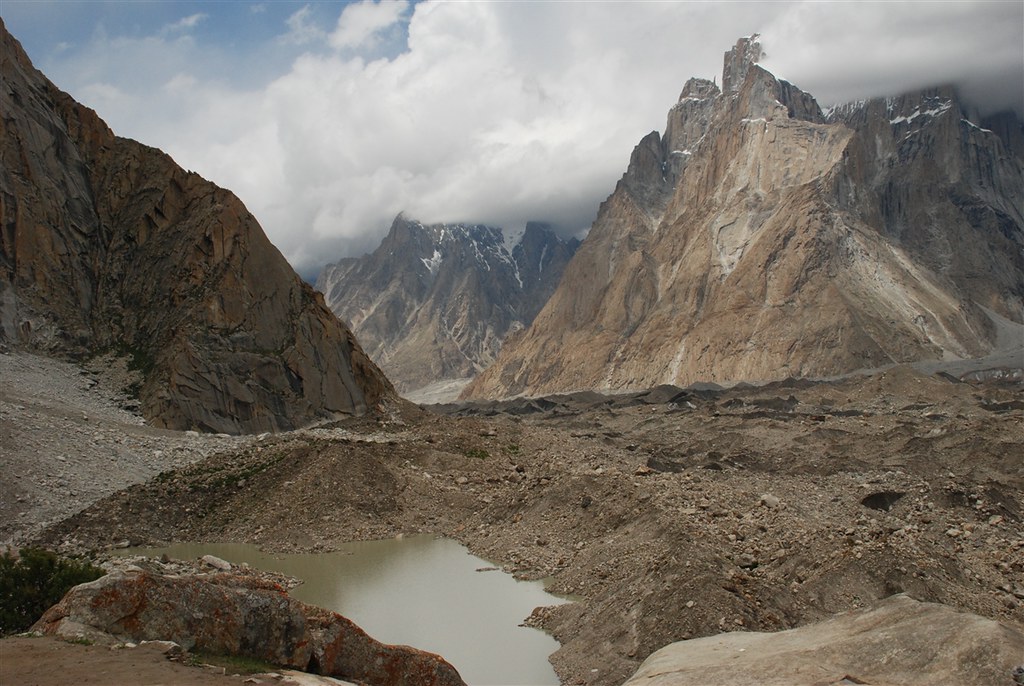
Comments
Nothing here yet. Share your view or ask a question about this topic.