
Environment
Melting Glaciers, Rising Risks: The Future of Pakistan's Water Security
#cssnexusPakistan talks about its glaciers as a flood problem. The more difficult issue is the situation with a river system that may be running high for another couple of decades and then begin a decline, in a country with just about 30 days of water storage.
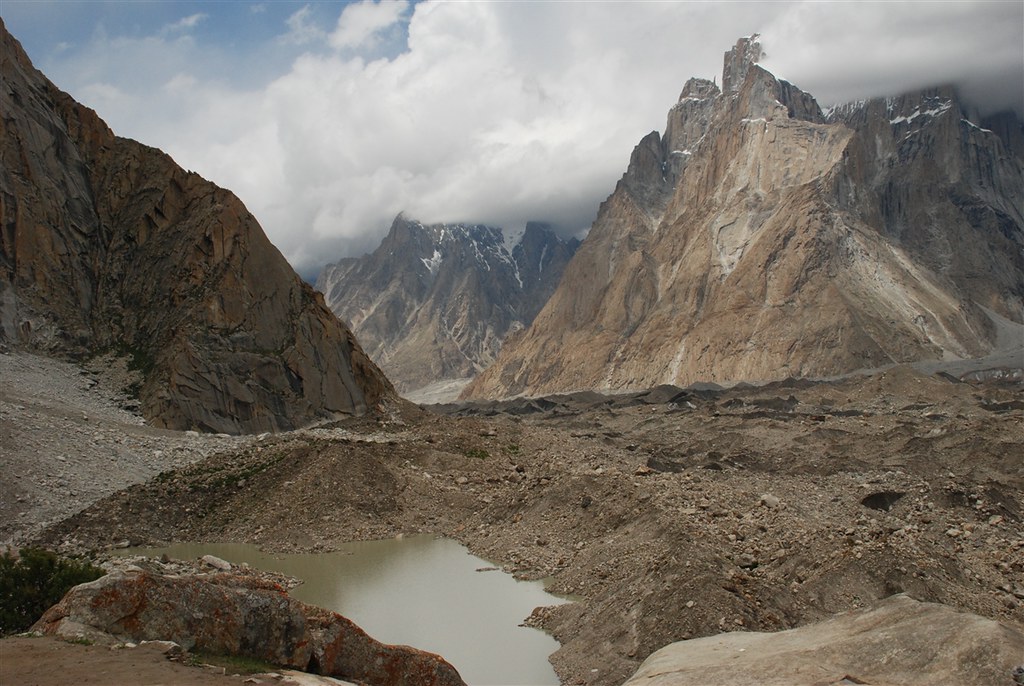
On the first days of July 2026, a heat wave hit the high valleys of Nagar and a glacial flood warning was issued by the National Disaster Management Authority (NDMA) for Hoper and Hisper. Roads were blocked in parts of Gilgit-Baltistan for five consecutive days by the end of this month. The season ended with 108 disaster events in the region, of which just two were glacial lake outburst floods (GLOFs), and neither of these resulted in fatalities.
That's a success story in early warning one way, and one way only. Another way to read it: It's the extent of how limited our conversation is. The name of Pakistan's glaciers comes in Pakistan's discussion only when it breaks something. Much less is said about the question that really will be important over the coming half-century: How much water will the Indus really deliver in which months and how will the country store it?
Two clocks on one river
The main question posed in this article is why Pakistan has two timepieces, and is observing only one of them. The quick clock is the flood, a lake bursts, a bridge goes, and a minister visits. Slow clock: supply. When ice melts quickly, the rivers will be able to transport more water for a period, and the additional flow may be interpreted as security. It is more akin to squirreling away money. When the ice stored is reduced enough, the additional flow decreases.
ICIMOD, the regional mountain research centre, projects that glacier melt will continue to contribute to the flows of rivers in the Hindu Kush Himalaya until around 2050 and then fall back towards 2100. I couldn't find a published year specific for the Indus. The lack of this information is part of the problem. The most significant planning day of Pakistan is taking a loan from a regional average.
What the ice is telling us
Start with the most basic fact, the number of glaciers. The figures in circulation vary from approximately 7253 (in 2019, a disaster official from the areas of the federally administered territories of the Gilgit-Baltistan) to over 13,000 (in 2025, humanitarian reports). The gap is likely to be due to different inventories and definitions but a country should be able to state which it will use.
The risk numbers are more solid. According to UNDP, there are 3,044 glacial lakes in the region of Gilgit-Baltistan and Khyber Pakhtunkhwa, with 33 lakes classified as hazardous lakes and the population living in these lakes is estimated at 7.1 million. ICIMOD also discovered in the broader Hindu Kush Himalaya that glaciers were losing mass at twice the rate in the decade ending in 2019 compared to the previous one, at 0.28 metres of water equivalent per year versus 0.17.
The long-range numbers are dependent on the temperature rise to which the planet will warm. An ICIMOD scientist's summary of the projections gives a loss of about 50 per cent of the ice by 2100 at 2°C, 55 to 75 per cent at 3°C, and 70 to 80 per cent at 4°C. These are area statistics which should not be cited as if they relate to Pakistan only.
This is because Pakistan's ice isn't uniform. An ICIMOD study in the Hunza basin revealed the well-known Karakoram anomaly, in which little change in mass was observed between 1973 and 2009. It now appears this safeguard is under threat, and ICIMOD scientists also observe melting at the site. Those who are claiming that all the glaciers are melting in Pakistan at a uniform rate are wrong and those who claim that it is the anomaly and it is okay are also wrong.
The figure nobody agrees on
What I noticed most while digitizing the values I found for this article was that no single number really stood out to me, but rather it was the range of the numbers. What is the proportion of ice and snow water contribution to the Upper Indus? According to a 2013 World Bank publication, glacier runoff accounts for about 18 per cent of flow, while the remaining bulk is from seasonal snow melt. In 2014, Lutz et al. assigned glacier melt a runoff contribution of 40.6 per cent. In 2009, Immerzeel and others concluded that the snow and glacier contribution was over 72 per cent.
The following studies are not mutually incompatible. They employ a variety of techniques, time spans and basin delineations, and some include snow and ice. However the policy implication is that it is a reality. Should glaciers provide 18 per cent, the near-term risk is primarily due to snowfall in the winter. Loss of 40 per cent eventually results in a more serious structural loss if they provide that. If the farmer is right, the answer is different from that of the planner in Islamabad, Sindh.
Based on the snow record, the first one deserves to be given more media attention than it is. The April 2026 update of ICIMOD revealed that the snow persistence in the Hindu Kush Himalaya was the worst ever recorded and at a record 27.8 per cent below normal, for the fourth consecutive year. For the Indus basin the deficit was 18.1 per cent, after 24.5 per cent in 2024 and 16 per cent in 2025. Glaciers get the headlines, but a substandard winter can have long term consequences to the next sowing season before a glacier melts.
A small tank makes everything worse
If Pakistan had a place to store water, it would be easier to tackle the changes in flow. It does not. The country's water storage is estimated to be around 30 days' worth of water compared to the generally accepted water security target of 120 days' worth of water. According to the figures provided by WWF-Pakistan to Dawn, the availability of water per person has dropped from approximately 5,600 cubic metres to 930 cubic metres per year in 2023. On the standard Falkenmark scale, anything below 1,000 is water scarcity.
Demand has a similar focus. More than 90 per cent of water withdrawn is used for agriculture, reported efficiency for irrigation use is less than 45 per cent and the State Bank has pegged the delivery efficiency of the Indus Basin Irrigation System at 36 per cent. While it's hard to find an exact number, all estimates conclude that over half of the water pumped for irrigation is never used for a crop.
Here are the places where the two clocks are synchronizing. Much of the water from glacier melt flows through a system where there is little capacity to store the water, especially in summer when the melt is higher in some instances during heatwaves. The shortage seems to occur at planting time, when the snow is light. Pakistan may experience floods along with irrigation water shortage in a single year due to the same warming trend. I would not want to consider this a two-file, two-ministry approach, which is why.
The treaty does not cover this
The Indus Waters Treaty was declared in abeyance by India on 23 April 2025 and it was a national security event because the waters of Indus contribute more than 80 per cent of the irrigation water to Pakistan. In its ruling on 31 August 2026 the Court of Arbitration in The Hague decided that the treaty is not abeyant and that it was illegal to cause abeyance. Not participating, India has rejected the award and termed the tribunal "illegally constituted".
There's no harm for Pakistan to take the legal avenue, but a legal victory will not be a drop to the river. This treaty of 1960 is made to split up rivers between two states. It doesn't say anything explicit that the ice in a basin is declining and that there are more pronounced seasonal variations in the future, which is what the basin is designed for. Even if the treaty could be restored as it was, the bigger hydrological question would remain unresolved. The whole threat to the Indus is national debate, which talks about India as a whole. There is no negotiating partner for the climate threat.
What the floods do and do not prove
It is important to be precise here, too. The 2022 event left approximately 33 million people impacted and has been referred to as a glacier disaster. Not, at least, primarily. The flooding in the south was mostly caused by heavy monsoon rains, though the chief meteorologist said a total of 16 outburst events occurred till the beginning of this September in Gilgit-Baltistan while it took five to six outbursts in previous years. If glaciers are blamed for all of this, a case that is strong enough gets weaker.
This is enough damage to the real glaciers. During August 2025, due to the flood, over 100 houses were destroyed and an artificial lake was created, which is presently more than seven kilometres long, and an outburst of Shisper Glacier swept away a portion of the Karakoram Highway. An early estimate for the damage in the summer in Gilgit-Baltistan was put at over Rs 20 billion, according to one account.
The GLOF-II project, funded by Green Climate Fund with US$37 million, has reportedly deployed 284 early warning systems, and the lack of casualties in the two outbursts in 2026 is promising. One season is too small a sample to prove the case, however. Warnings also save people, not houses, orchards or roads. Those who object to the project have every reason to be concerned that communities continue to be re-built in the same flood paths.
The way forward
The initial cost of the first step is relatively small in comparison to the cost of a dam. One single official, open and updated periodically water budget for the Indus should be published by the Government of Pakistan which will include snow, ice and rain shares by sub-basin with an honest disclosure of the uncertainty estimate. If it is not done, all other decisions are guesses. It should involve more of the high level weather and stream gauges, and data should be shared between provinces and with researchers rather than departments.
Secondly, storage need not be limited to large reservoirs. There's a time and place for big dams, but they can take time and money to close a gap as wide as 30 to 120 days, and they will not be closing that gap anytime soon. Water not lost is water available, and this is considered to be storage in practice for groundwater recharge, canal lining where appropriate, and on-farm efficiency. A small improvement in irrigation efficiency would represent a greater gain in irrigation water than most new supply schemes, especially since in agriculture 90 per cent of irrigation water is consumed. The most difficult subjects, politically, cannot be avoided – pricing and crop choice.
Thirdly, flood policy must shift from warning to land use, by mapping hazard areas around the 33 identified lakes, and funding relocation instead of reconstruction on the same site. Fourthly, Pakistan must keep pressing their case at The Hague and ensure that in the future the treaty data comes late or not at all. It implies that it should be monitored from its own satellites as well as be involved in further scientific collaboration through regional scientific organizations like ICIMOD to which both India and Pakistan belong.
The ice in the north has accumulated over a number of thousands of years and its speed of melting is influenced to a great extent by global emissions, over which Pakistan has no control. What Pakistan can control is if it is still surprised when the river changes. So far as the existing facts are concerned, the clock is not working fast enough, and no one is at the helm to keep it going.
For CSS and PMS aspirants
It is very much relevant to Environmental Science, Current Affairs, Pakistan Affairs and also in Essay paper and supports the questions on Climate Change, Water security, Indus Waters Treaty and Disaster management. Be precise in assigning your numbers, whether it's a regional or national figure, and don't say that the 2022 floods were caused by glaciers. For an essay, the two-clocks argument, fast floods against slow supply can be used as a thesis, or as the analytical heart of a long answer.
Tags
The writer can be reached at ma6749429@gmail.com
Get new explainers on WhatsApp
Follow channel

Comments
Nothing here yet. Share your view or ask a question about this topic.