
International Relations
Foreign Policy as a Family Business: How Private Deals Paved the Road to War with Iran
#cssnexusFrom walking out of the Iran nuclear deal in 2018 to open war in 2026, America's Middle East policy under Trump was shaped by personal alliances and Gulf money. Here is what that means for diplomacy, international law and Pakistan.
Ameer Hamza
12 Nov 2026 · 6 min read
Test yourself: GK MCQs on this subject
- World current affairs MCQs· Current Affairs
- International organizations MCQs· World Geography
- Countries, capitals and currencies MCQs· World Geography
For one-paper tests, revise with the GK library.
Wars are typically cast in security terms — threats, red lines, deterrence. The slippery slope towards America's battle with Iran offers a less pleasant one. A column in Dawn last week, and a host of reporting before it, claims that the money, family connections and private pacts were just as influential in shaping Washington's Middle East policy under Donald Trump as any strategic review. Jared Kushner, the president's son-in-law and senior adviser in his first term, and a handful of Gulf rulers and Israel's prime minister Benjamin Netanyahu are at the heart of that tale, with all parties seeking one common objective: to limit Iran and reverse Barack Obama's nuclear agreement. The episode is not just about one family but whether or not all the allegations are true. How a superpower's foreign policy changes when it becomes a business.
From institutions to individuals
Institutions are the foundation of Modern Diplomacy. The State Department, intelligence agencies and the National Security Council are there to filter and check and consult, making decisions of war and peace pass through them. Much of this machinery was put on hold in the Middle East during much of Trump's first year in office. The region's file was handed to Kushner, a real-estate developer with no diplomatic experience, who met with Saudi Crown Prince Mohammed bin Salman, as well as Mohammed bin Zayed of the UAE and Netanyahu, sometimes personally, in the region.
The outcome was true and, to the supporters, was impressive. On 8 May 2018, Washington withdrew from the Joint Comprehensive Plan of Action (JCPOA), signed in July 2015, and substituted it with a “maximum pressure” sanctions campaign. A US drone strike killed General Qassem Soleimani in Baghdad on 3 January 2020. The UAE and Bahrain signed the Abraham Accords with Israel at the White House on 15 September 2020, to be followed by Morocco and Sudan. The design for each step was the same: a regional order centered around Israel and the monarchies of the Persian Gulf, excluding Iran from it.
Where policy met profit
It didn't go down well once the term was finished. Despite objections from the fund's own advisory panel, months after his time at the White House, Kushner established a private equity firm, Affinity Partners, that raised the bulk of its financing from the Gulf, with a reported $2 billion from the Public Investment Fund of the Kingdom of Saudi Arabia. In the US Congress, critics posed the obvious question: was this based on a payment for future access, or payment for past favours? Newer allegations are more severe. A recent book alleges that Netanyahu assisted in concealing the payments Netanyahu received from Kuwait's leadership to Kushner, a claim backed by no evidence and which Kushner has dismissed as "completely insane," according to his lawyer.
All this does not constitute proof that a war was purchased. But its portrayal of a public-private divide that got dangerously blurred. When that same person who helped formulate Iran policy is later able to raise billions from governments that have a direct interest in Iran policy, and then show up as an envoy in subsequent nuclear talks with Tehran, as reports state Kushner did in early 2026 in conjunction with Steve Witkoff, all decisions are suspect, both at home and abroad.
Why the road led to war
The real cost, however, was in the strategy itself. The most intrusive inspection regime that the International Atomic Energy Agency had ever conducted had capped Iran's uranium enrichment at 3.67 percent and its enriched stockpile at 300 kilograms. Those limits were withdrawn when the deal fell apart. Iran started to enrich up to 60 percent, near weapons grade, and inspector access was reduced. As a result of a policy aimed at preventing Iran from developing a nuclear bomb, Iran was taken closer to one.A policy aimed at curbing Iran's development of a nuclear bomb brought Iran closer to a nuclear bomb.
diplomacy was discredited and force was the only option remaining. In the region, a strike on Iran's nuclear sites, such as Fordow, Natantz, Isfahan and the United States of America, escalated to an open war in 2026 and affected the area in various ways, as detailed in our analysis of [the regional fallout of a strike on Iran: the geopolitical ramifications of a hypothetical](the-regional-fallout-of-a-strike-on-Iran-the-geopolitical-ramifications-of-a-hypothetical). Legality of strikes is highly controversial under the auspices of international law, as strikes can only be legal in the event of an armed attack or in response to a Security Council resolution. Militarily, the war for the moment appears futile in the classic sense—bombing can slow down a nuclear programme, but cannot remove the knowledge that is embedded in it, and a regime attacked is all the more motivated to believe that nothing – only a bomb – can save it.
The Gulf's buyer's remorse
The situation is ironic for the Gulf countries that pledged their support for the plan. They didn't want a war on their doorstep, they wanted Iran contained. Instead, their cities, oil plants, shipping ports are now within the conflict zone and the missile attacks near the holy sites of Haramain illustrate the extent of the fire. Gulf officials now say they feel the business alliance they struck with Kushner's circle has provided them little protection, reports said. Personal relationships, as it happens, are as firm as the other person's interest.
Lessons beyond Washington
The episode offers three lessons. First, personalised diplomacy is fast but fragile. Deals made between individuals can be signed in weeks, but they lack the institutional memory and legitimacy needed to survive a change of mood or government. Second, conflicts of interest are a security issue, not just an ethics issue. When adversaries and allies alike believe a policy can be bought, deterrence and credibility suffer together. Third, tearing up a working agreement without a better one carries costs that are paid much later, often in blood. Domestic checks matter too: Congress's war powers and the verdict of American voters remain the only brakes on a president who treats foreign policy as a family enterprise.
The way forward
A durable settlement will need the same things the JCPOA offered: verified limits on enrichment, inspectors on the ground and sanctions relief in return. It will also need mediators whom both sides trust, which is where regional states with ties to Washington, Riyadh and Tehran can play a role. Above all, it needs a return to diplomacy conducted by institutions rather than by in-laws and investment funds.
For CSS and PMS aspirants
This topic connects other points of syllabus: US Foreign policy and Middle East, [Nuclear Non Proliferation Regime – India, USA and Pakistan's balancing act between Saudi Arabia and Iran](/css-solved-papers/current-affairs/css-2025-current-affairs-nuclear-non-proliferation-regime-india-us-party-pakistan-saudi-arabia-ir Iran), International law on use of force, and Abraham Accords. Keep in mind the important events: JCPOA signed in July 2015, US withdrawal on 8 May 2018, Soleimani killed on 3 January 2020, Abraham Accords signed on 15 September 2020, and strikes on Iran's nuclear sites in June 2025. In an answer, address corruption claims as allegations instead of as facts and aim at the analytical point, personalised, transactional diplomacy weakens institutions, undermines credibility and increases the likelihood of war. The case for Pakistan is a warning that it is important to maintain institutions in its foreign policy and remain neutral in a conflict that is perched on its western doorstep.
Practise this topic: CSS solved answers
- CSS Special 2023 · Current AffairsChina's proactive diplomacy has successfully achieved rapprochement between the two traditional rivals Saudi Arabia and Iran. Analyze the impact of this significant development on the geo-politics of the region.
- CSS 2024 · Current AffairsSaudi Arabia and Iran both have significant place in Pakistan's foreign policy. How Pakistan can maintain friendly relations with both Saudi Arabia and Iran, especially after the mediation of China between the two countries?
- CSS 2016 · Current AffairsHow do you see recent developments in the Middle East, particularly with reference to deteriorating relations between Saudi Arabia and Iran? What role, if any, Pakistan could play in reducing the tensions between the two Muslim countries?
See how real exam questions are answered: browse the CSS solved past papers, including Current Affairs, Pakistan Affairs and Essay answers.
Get new explainers on WhatsApp
Follow channel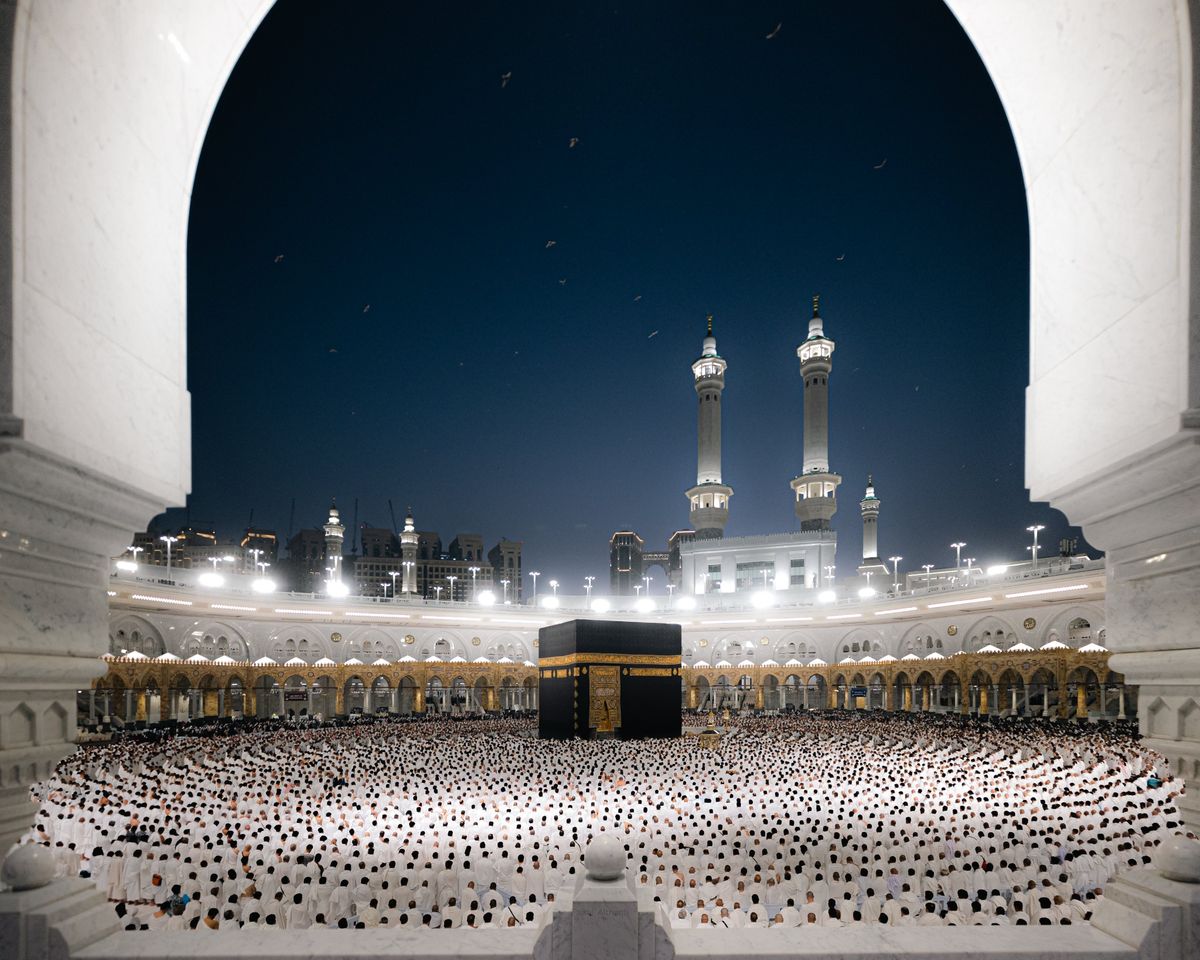
Comments
Nothing here yet. Share your view or ask a question about this topic.